
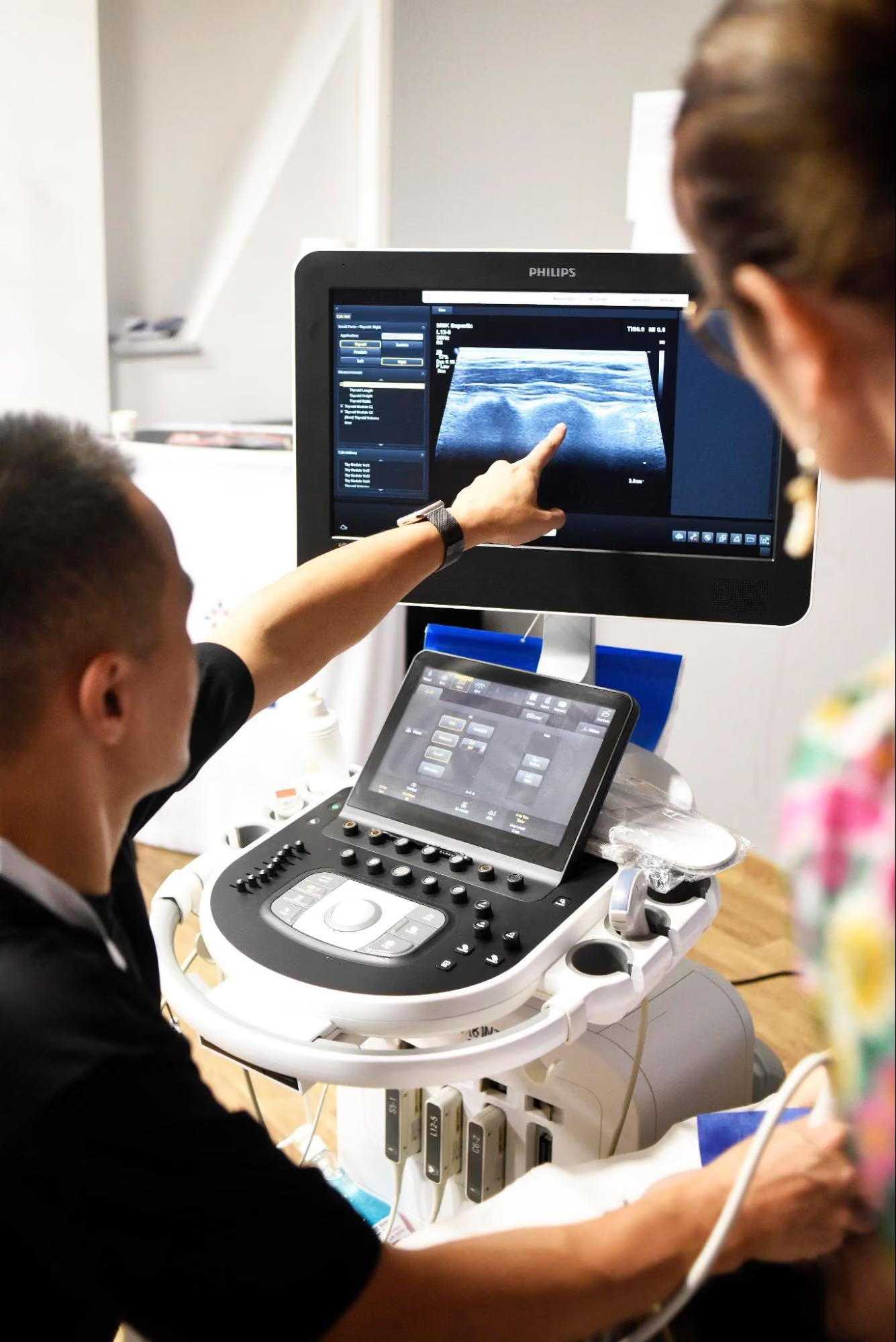
1. Image-guided nerve blocks
Nerve blocks are a fundamental technique in pain therapy, used to interrupt the transmission of pain signals to the brain.
- How it works: A local anesthetic and/or steroid is injected near a nerve or group of nerves. The procedure is guided by imaging, such as ultrasound or fluoroscopy, for maximum precision.
- Indications: Lower back pain, neck pain, postherpetic neuralgia, or complex regional pain syndrome.
- Benefits: Rapid pain relief and minimization of systemic side effects.
2. Radiofrequency (RF) ablation
This minimally invasive technique uses thermal energy to disrupt the nerve fibers that transmit pain.
- How it works: A specialized catheter is positioned near the target nerve, and radiofrequency energy is applied to create a controlled lesion.
- Indications: Chronic lower back pain, facet joint osteoarthritis, and occipital neuralgia.
- Benefits: Long-lasting pain relief and reduced reliance on pain medication.
3. Epidural steroid injections
This is a widely used technique for treating pain caused by inflammation and compression of spinal nerves.
- How it works: Steroids are injected into the epidural space, reducing inflammation and edema around the affected nerves.
- Indications: Herniated discs, spinal stenosis, and radiculopathy.
- Benefits: Temporary or long-term relief of painful symptoms.
4. Peripheral Nerve Stimulation (PNS)
This method involves the use of implantable devices that deliver electrical impulses to peripheral nerves to modulate pain signals.
- How it works: An electrode is positioned near the target nerve, and electrical impulses are adjusted to reduce the perception of pain.
- Indications: Neuropathic pain, post-surgical pain, or complex regional pain syndrome.
- Benefits: A reversible, non-pharmacological method with minimal side effects.
5. ESP (Erector Spinae Plane) Block
This is a paravertebral block technique used for the management of acute and chronic pain.
- How it works: A local anesthetic is injected between the erector spinae muscles and the vertebral transverse processes. The procedure is ultrasound-guided for precision.
- Indications: Postoperative pain, rib fractures, and chronic thoracic pain.
- Benefits: Effective pain reduction with minimal risk of complications.
Conclusion
Pain management specialists must stay up to date with these advanced techniques to provide patients with effective, personalized treatments. Integrating these methods into clinical practice significantly improves patients' quality of life while reducing the need for long-term analgesic use.
References
- https://www.painphysicianjournal.com/
- https://pmc.ncbi.nlm.nih.gov/articles/PMC9818465/
- https://rapm.bmj.com/content/45/6/424.abstract
- https://www.researchgate.net/publication/278692729_Comprehensive_Treatment_of_Chronic_Pain_by_Medical_Interventional_and_Integrative_Approaches