What is Interventional Pain Management?
This medical specialty focuses on:
- Precise diagnosis of the causes of chronic pain through imaging and detailed clinical evaluation;
- Performing interventional procedures, such as image-guided injections, denervations, or the implantation of medical devices for pain relief;
- Individualizing treatment for patients with refractory pain, reducing reliance on opioids or other systemic analgesics.
The main goals of Interventional Pain Management
- Reducing pain and improving patients' quality of life;
- Preventing the progression of acute pain into chronic pain;
- Restoring patient functionality and independence in daily life.
What types of pain does Interventional Pain Management treat?
Interventional Pain Management addresses a variety of conditions and pathologies:
1. Musculoskeletal pain
- Cervical and lumbar disc herniations.
- Osteoarthritis and chronic joint pain.
- Myofascial pain syndrome.
2. Neuropathic pain
- Trigeminal neuralgia.
- Complex regional pain syndrome (CRPS).
- Diabetic neuropathy.
3. Cancer pain
- Management of pain associated with malignant tumors through nerve blocks and intrathecal pump implants.
4. Post-surgical or post-traumatic pain
- Postherpetic neuralgia.
- Post-laminectomy pain syndrome.
5. Visceral pain
- Chronic pelvic pain.
- Chronic pancreatitis.
Procedures and techniques used in Interventional Pain Management
Interventional pain specialists have an extensive arsenal of minimally invasive techniques at their disposal, such as:
1. Image-guided injections
- Epidural steroid injections for herniated discs.
- Nerve blocks (e.g., stellate ganglion block).
2. Pulsed or continuous radiofrequency
- Ablation of sensory nerves involved in pain transmission (e.g., knee, spine).
3. Electrical stimulation
- Peripheral nerve stimulation (PNS) or spinal cord stimulation (SCS).
4. Intrathecal implants
- Intrathecal pumps for delivering analgesics directly into the subarachnoid space.
5. Vertebroplasty and kyphoplasty
- Techniques used to treat painful vertebral fractures.
The role of imaging in Interventional Pain Management
Image guidance plays a central role in pain management procedures:
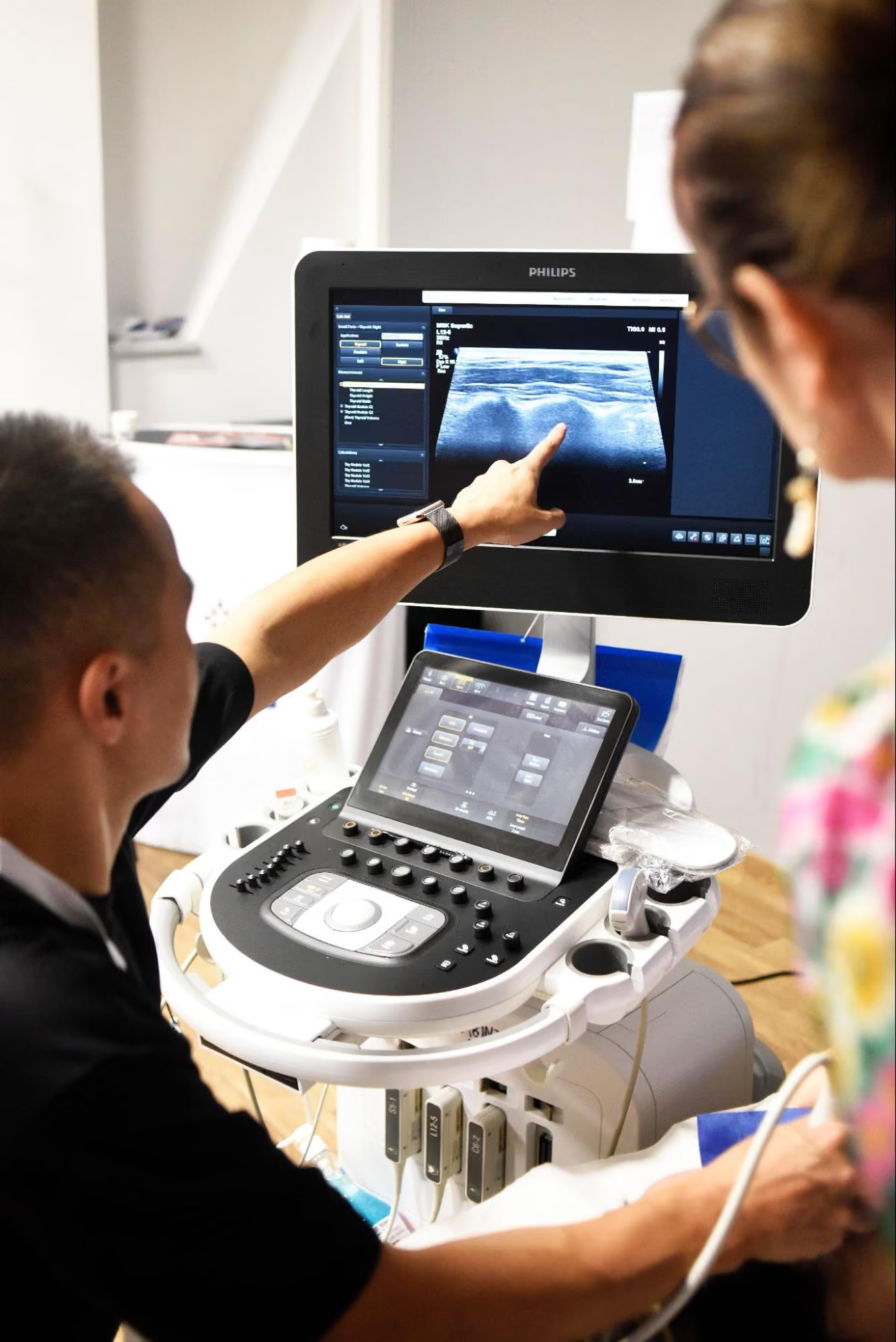
- Ultrasound is used to identify peripheral nerves and guide injections.
- Fluoroscopy ensures precise localization for spinal procedures.
- Computed Tomography (CT) assists with complex treatments, such as nerve blocks in deep-seated areas.
The future of Interventional Pain Management
Technology plays a crucial role in the development of this field. Innovations such as the use of artificial intelligence in diagnostics, next-generation stimulation devices, and biomaterials for nerve regeneration are opening up new opportunities for personalized treatments.
Interventional Pain Management is an essential specialty in modern medicine, offering innovative solutions for patients with chronic pain. With rigorous training and access to the latest technologies, physicians specializing in this field have the opportunity to transform patients' lives through effective, minimally invasive treatments.
References
Raja SN, Carr DB, Cohen M, et al. The Revised International Association for the Study of Pain Definition of Pain: Concepts, Challenges, and Compromises. Pain, 2020.
Cohen SP, Hooten WM. Advances in the diagnosis and management of chronic pain. BMJ, 2021.
Deer TR, Pope JE, Hayek SM, et al. The Neurostimulation Appropriateness Consensus Committee (NACC) Recommendations on Best Practices for the Use of Spinal Cord Stimulation. Neuromodulation, 2020.